If you want the strongest privacy-by-default with minimal tuning, Apple's iPhone is usually the easiest "set it and forget it" choice. Google (Pixel/Android) can be very private, but it demands more control over cloud sync and ad/telemetry settings. Samsung adds strong device hardening via Knox, yet carrier/partner apps can complicate outcomes.
Privacy priorities at a glance for budget-conscious users
- Prefer strong lock-screen and account protection first (PIN/passcode, biometrics, recovery options) before app-level tweaks.
- Choose a platform with predictable security updates for your model; privacy settings don't help much on an unpatched device.
- Minimize cloud exposure by syncing only what you truly need (photos, contacts, backups), regardless of brand.
- Limit advertising identifiers, cross-app tracking, and background location; these are high-impact, free switches.
- On Samsung, plan for extra time to review carrier/partner apps and permissions even if hardware security is strong.
- Budget tip: a mid-range phone with long update support often beats an older flagship with uncertain patches.
How Apple implements on-device privacy and its cost-free protections
| Apple | Samsung | |
|---|---|---|
| On-device defaults + centralized controls; fewer OEM variables. | Deep controls, but many features assume cloud-first sync. | Strong device security layer plus OEM/carrier variability. |
Use these criteria (in this order) when you're doing a practical เปรียบเทียบความปลอดภัย iPhone กับ Android for everyday privacy and security:
- Update reliability for your exact model (how consistently it receives OS and security patches).
- Account recovery strength (recovery keys, trusted devices, SIM-swap resilience).
- Default permission posture (how aggressively the OS asks/blocks access to location, photos, microphone, Bluetooth).
- On-device processing options (features that work without uploading content to the cloud).
- Backup and sync granularity (can you exclude categories like photos, app data, messages, call history?).
- Tracking and advertising controls (system-wide switches that actually reduce cross-app profiling).
- App ecosystem hygiene (install friction, review/verification signals, and permission resets for unused apps).
- Hardware security baseline (secure enclave/TEE behavior, secure boot, and how data is protected when locked).
For people explicitly searching ตั้งค่าความเป็นส่วนตัว iPhone, the practical advantage is that Apple concentrates many high-impact switches in a few screens (Privacy & Security, Location Services, Analytics, Tracking), so you can reduce exposure fast without extra apps.
Google's cloud-first model: data flows, controls and what costs money
| Apple | Samsung | |
|---|---|---|
| Sync is present, but many protections are effective even with minimal cloud use. | Best experience assumes Google Account sync; privacy improves when you restrict what leaves the device. | Often uses both Google services and Samsung services; review two "cloud stacks." |
Below are common "Android privacy" operating modes, from simplest to most controlled. This helps when you're doing ตั้งค่าความปลอดภัย Android and deciding how much Google cloud you want.
| Variant | Who it fits | Pros | Cons | When to choose |
|---|---|---|---|---|
| Standard Google Account (default sync on) | Most users who value convenience | Easy backups, device restore, cross-device continuity | More metadata and content may be synced; requires active settings review | If you want "works automatically" and will spend 20-30 minutes tightening settings |
| Hardened Google Account (sync selective) | Intermediate users who want control without breaking basics | Keep Play Protect, updates, and essential services while reducing data sharing | Some features degrade (assistant history, smart suggestions, seamless restore) | If you want Android flexibility but prefer minimal cloud footprint |
| Local-first usage (minimal Google sync) | Privacy-focused users willing to manage backups manually | Less routine data flow to cloud; fewer linked profiles | Harder migrations; higher risk of data loss if you skip local backups | If you can commit to regular offline backups and careful app choices |
| Work profile / managed device (policy-based controls) | Employees/contractors with corporate requirements | Strong separation of work data; admin-enforced baselines | Admin can add monitoring; personal freedom may be limited | If your employer needs compliance and you want separation on one device |
| Family/shared device mode (multiple users / restricted access) | Households, shared tablets, supervised use | Limits accidental exposure; compartmentalizes accounts | More setup overhead; some apps behave inconsistently across profiles | If device sharing is unavoidable and you need clear boundaries |
Cost note: core security and privacy toggles are free. Paid layers usually appear as subscription cloud storage for backups or add-on identity/monitoring bundles; treat them as optional convenience, not a substitute for basic controls.
Samsung Knox, customization and carrier/partner implications
| Apple | Samsung | |
|---|---|---|
| Low OEM variability; fewer preloads. | Varies by manufacturer; Pixel is the baseline reference. | Extra hardening plus extra services and preinstalled apps depending on region/carrier. |
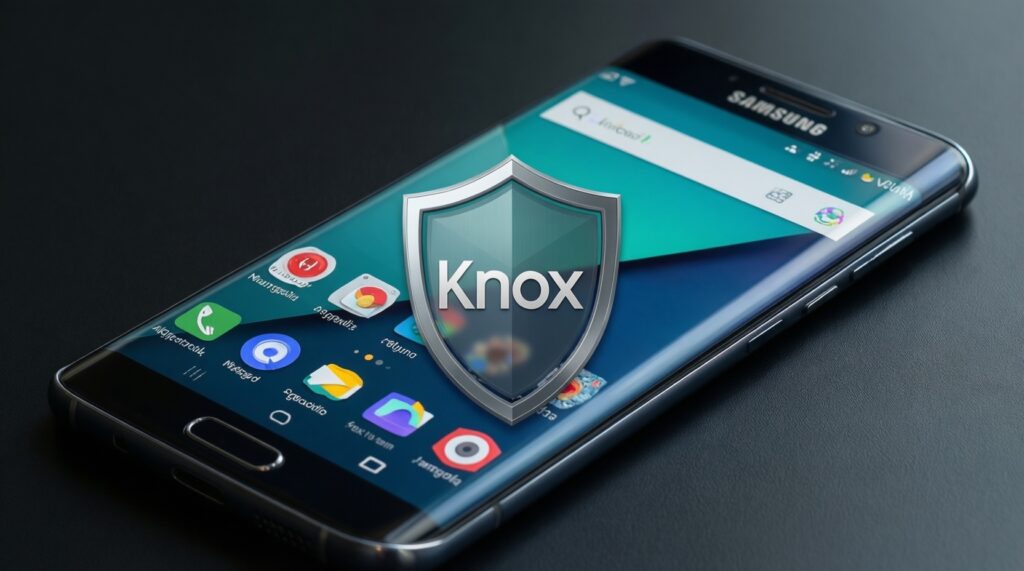
Samsung Knox คืออะไร in practical terms? It's Samsung's security framework (hardware-backed protections, secure boot, container/work profile capabilities) layered on top of Android. It can improve device resistance, but you still need to audit apps, permissions, and cloud accounts.
- If you buy a carrier-locked Galaxy, then plan a first-day cleanup: disable/uninstall carrier apps, remove unnecessary permissions, and review notification access-partner software is a common privacy weak spot.
- If you want "Android, but simplest," then prefer Pixel or an unlocked Galaxy and keep customization minimal; fewer add-ons means fewer background data paths to audit.
- If you need strong work/personal separation, then choose Samsung (Knox/Work Profile features) or any Android with a managed profile-set a separate PIN for the work container and block data sharing across profiles.
- If your priority is lowest cost with acceptable risk, then pick a newer budget model with predictable updates and avoid old flagships with uncertain patch cadence; hardening settings matter more than premium materials.
- If you can pay for premium convenience, then prioritize devices that make secure recovery and backups easy (reliable cloud restore + strong account protection) so you don't weaken security by skipping backups.
Direct trade-offs: advertising, telemetry and cross-device syncing
| Apple | Samsung | |
|---|---|---|
| Tracking controls are centralized; cross-device features are strong inside Apple's ecosystem. | Sync and personalization are powerful; privacy depends on how much history and activity you keep. | Often runs dual ecosystems (Google + Samsung); more toggles to reconcile. |
- Decide your baseline: maximum convenience (more sync) or minimum data sharing (less sync).
- Turn off cross-app identifiers first: ad ID personalization and cross-app tracking controls at OS level.
- Reduce background visibility: restrict location to "While using," disable unnecessary Bluetooth scanning, and limit background refresh for high-risk apps.
- Choose one primary cloud account stack (Apple ID or Google Account + optional Samsung account), then disable redundant syncing in the other.
- Keep security logs local where possible: opt out of analytics/diagnostics sharing unless you actively want to contribute.
- Validate with a quick audit: review "Recent permissions"/privacy dashboard and revoke anything that surprises you.
Use this to answer the practical version of ซื้อมือถือที่ปลอดภัยที่สุด: the "best" choice is the one whose trade-offs you will actually maintain-especially ad/telemetry limits and sane syncing.
No‑cost settings to enable now on iPhone, Pixel and Galaxy
| Apple | Samsung | |
|---|---|---|
| Fewer places to miss critical toggles. | Controls are deep; easy to leave defaults that leak more metadata than intended. | More settings surfaces (Google + Samsung + carrier), so omissions are common. |
Common mistakes that keep devices less private than users expect (all fixable with free settings):
- Using a 4-digit PIN instead of a longer PIN/passcode; lock-screen strength is foundational.
- Leaving lock-screen notifications fully visible (OTP codes, messages, previews) on a device you carry everywhere.
- Allowing location "Always" by habit; most apps should be "While using" with precise location off when not needed.
- Not reviewing microphone/camera permissions after app installs; revoke for apps that don't need them.
- Keeping ad personalization on (Apple/Google/Samsung each has a version); disable to reduce profiling.
- Leaving web and app activity/history on indefinitely; shorten retention or pause where appropriate.
- Installing redundant security/cleaner apps that request invasive access; built-in platform protections are usually safer.
- Skipping system update settings (auto-download/auto-install when available) and relying on "I'll do it later."
- Not enabling device-finding and recovery safeguards (account recovery options, trusted devices) before you need them.
Routine low-cost practices and automations to maintain security
| Apple | Samsung | |
|---|---|---|
| Low-maintenance, consistent controls; great if you won't micromanage. | Best for users who will periodically audit account activity and sync scope. | Best if you want Android flexibility plus Knox, and you'll do a quarterly app/permission cleanup. |
Best for low-effort privacy is typically iPhone if you want consistent defaults and straightforward review screens. Best for configurable privacy is often Pixel/Android if you're willing to tune cloud activity and permissions. Best for "Android plus extra hardening" is usually Samsung Galaxy with Knox-especially when you buy unlocked and regularly review preinstalled services.
Concise answers to common deployment and risk questions
What should I prioritize first: privacy settings or security settings?
Start with security: strong passcode/PIN, account recovery, and updates. Then tighten privacy (location, tracking, analytics), because a compromised device makes privacy toggles irrelevant.
Is iPhone automatically safer than Android?
No. A well-maintained Android (especially Pixel) can be very secure. iPhone is often easier to keep consistent across models, which reduces user error.
Do I need paid security subscriptions to be safe?
Not for baseline protection. Paid plans mainly add convenience features (extra cloud storage, monitoring) and don't replace OS updates, strong locks, and careful permissions.
How does Samsung Knox change the decision?
Knox can strengthen device-level security and enterprise controls. The trade-off is more services to audit (Samsung + Google + carrier), so setup discipline matters.
Which settings reduce tracking the most with the least downside?
Disable ad personalization/advertising ID, restrict location to "While using," and review app permissions. These typically preserve usability while cutting routine data collection.
What's the biggest hidden risk when switching phones?
Over-sharing during migration: restoring everything and re-enabling all sync by default. Migrate in phases and re-check permissions and account activity after setup.
What's the practical answer to "ซื้อมือถือที่ปลอดภัยที่สุด" on a budget?
Buy a newer model with reliable updates and use built-in protections fully. A cheaper phone you keep patched and hardened beats an older premium phone you can't keep current.