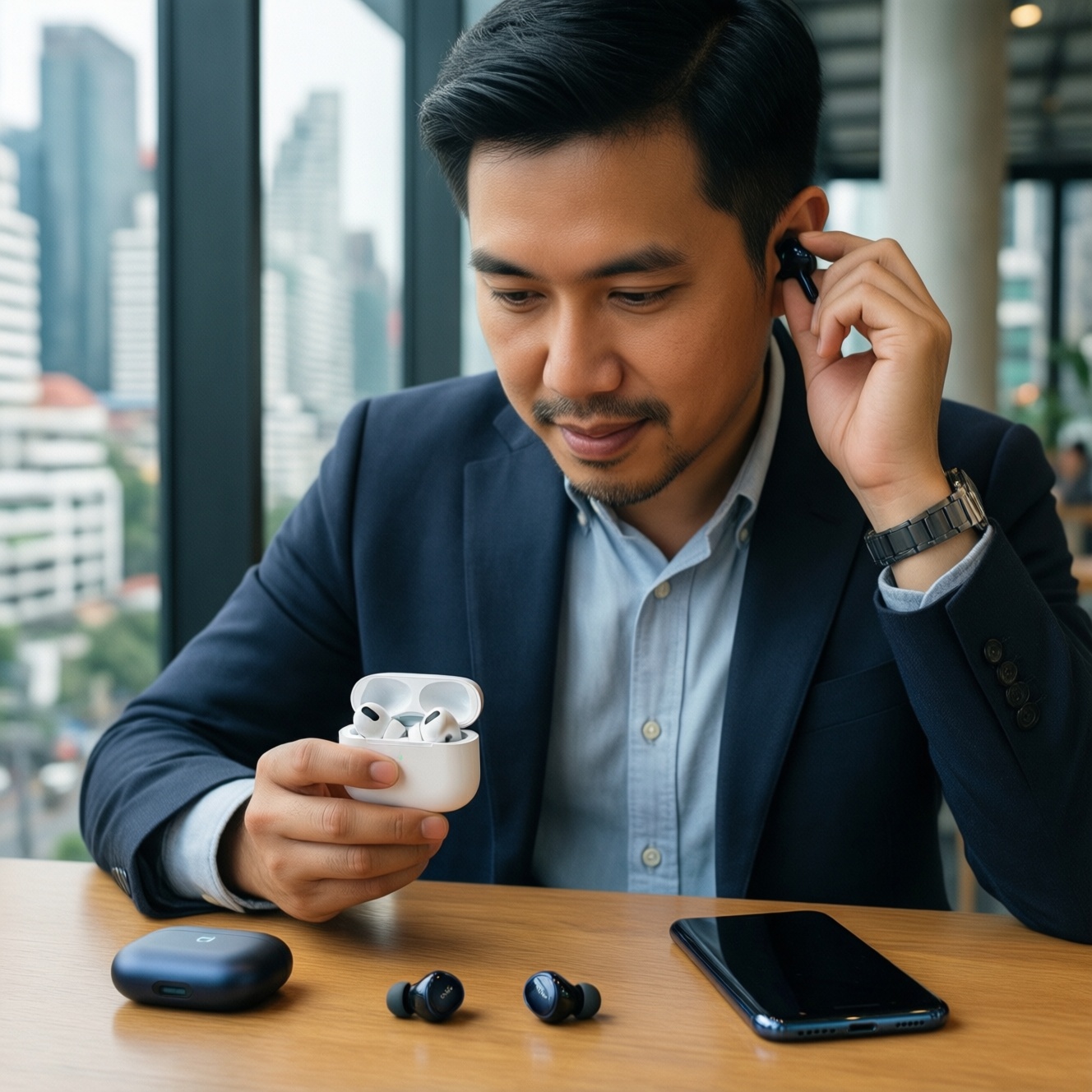
If you're choosing between AirPods, Pixel Buds, and Galaxy Buds for sound, ANC, and device switching in Thailand, start with your phone ecosystem and how often you swap devices. AirPods integrate best with Apple, Pixel Buds with Google services and Android, and Galaxy Buds with Samsung features-then refine by fit, tuning, and ANC stability for your commute.
Quick comparison snapshot for budget-minded buyers
- For the lowest friction pairing and handoff on iPhone/iPad/Mac, AirPods usually require the least setup and fewer connection "gotchas".
- For Android value with strong Google Assistant workflows, Pixel Buds Pro-class options often feel the most "native" to Google accounts.
- For Samsung phones and tablets, Galaxy Buds tend to unlock extra codec/features and smoother in-ecosystem switching.
- ANC quality varies more by ear-tip seal than brand-budget buyers should prioritize fit kits and return policy over spec sheets.
- If you need หูฟังไร้สาย สลับอุปกรณ์หลายเครื่อง รุ่นไหนดี, prioritize true multipoint and predictable reconnection over peak ANC marketing.
Sound signature and real-world listening: AirPods vs Pixel Buds vs Galaxy Buds
When people ask เปรียบเทียบ AirPods กับ Pixel Buds กับ Galaxy Buds, the biggest differences you'll actually notice come from tuning, fit, and how the earbuds behave at low volume in noisy places.
- Tonal balance (tuning): neutral vs bass-boosted vs "sparkly" treble; choose based on your library (pop/EDM vs vocals vs podcasts).
- Seal and tip options: a stable seal improves bass, ANC, and call clarity more than many upgrades in "driver quality".
- EQ flexibility: system-wide EQ vs app-only EQ; check whether EQ persists across devices.
- Volume linearity: some buds keep bass at low volume, others thin out; this matters on BTS/MRT commutes.
- Spatial / virtualization features: nice-to-have for movies; can harm timbre for music if poorly implemented.
- Codec behavior: Apple-focused paths vs Android-focused paths; stability often matters more than theoretical bitrate.
- Passive isolation: foam tips (if supported) can reduce the need for aggressive ANC that adds "pressure".
- Fit security: if you run or use motorbike taxis, prioritize secure fit over marginal sound differences.
Practical takeaway: If you can't get a consistent seal in 10 seconds, switch to a model with better tips/fit options before paying more for "better sound".
Active Noise Cancellation: measurable performance, modes, and battery impact
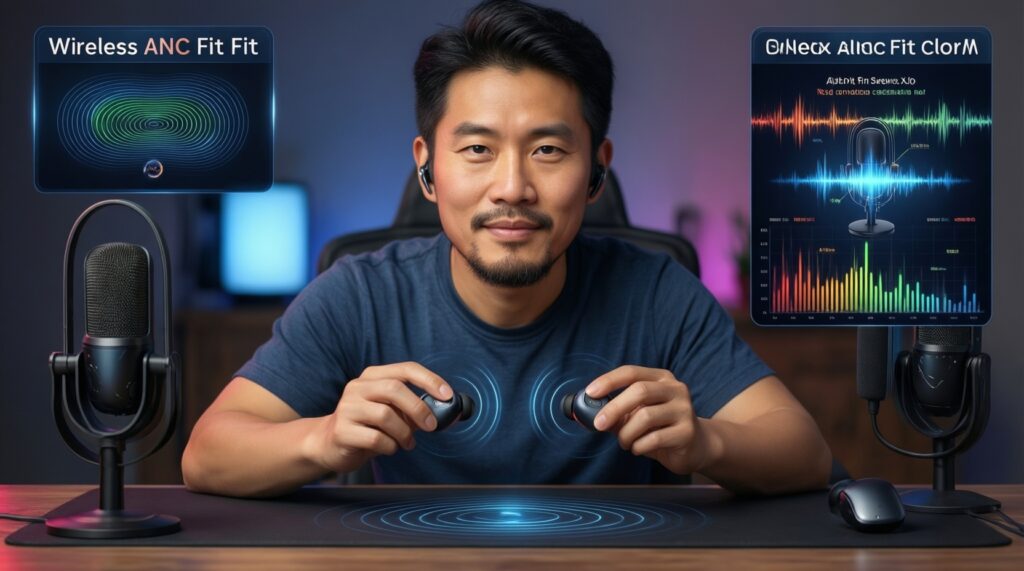
For หูฟังไร้สาย ANC รุ่นไหนดี, treat ANC as a system: seal + mic placement + adaptive processing. Even premium ANC can disappoint if the fit is marginal, while a mid-tier bud with a perfect seal can feel "stronger" on low-frequency engine noise.
| Variant | Who it fits | Pros | Cons | When to choose |
|---|---|---|---|---|
| AirPods Pro (Pro-class ANC) | iPhone-first users who commute and take many calls | Low-friction controls/integration in Apple ecosystem; stable transparency/ANC transitions | Best experience is Apple-leaning; Android feature set can feel reduced | If you keep an iPhone as your main phone and want reliable ANC day-to-day |
| Pixel Buds Pro (Pro-class ANC) | Android users invested in Google Assistant and Google apps | Strong Google-native features; good app control over ANC/transparency behavior | Some features depend on Android/Pixel software; fit is user-dependent | If you value Google workflows and want a balanced all-rounder on Android |
| Galaxy Buds2 Pro (Pro-class ANC) | Samsung Galaxy users wanting best in-ecosystem feature unlocks | Tight Samsung integration; typically strong tuning + feature set on Galaxy devices | Non-Samsung phones may lose some codec/features; tips/fit can be picky | If your daily device is Samsung and you want the cleanest Samsung experience |
| Non-Pro AirPods / older AirPods variants | Budget buyers who mostly need convenience, not maximum isolation | Easy pairing; good for quiet offices and casual listening | Weaker isolation by design on many non-tip designs; ANC may be absent | If your budget is tight and you're not battling heavy traffic noise daily |
| Mid-tier Galaxy Buds (non-Pro lines) | Samsung users on a tighter budget | Good value if discounted; decent everyday tuning | ANC and mic performance can drop first vs Pro lines | If you want Samsung-friendly buds but can't justify Pro pricing |
| Mid-tier Pixel Buds / A-series style options | Android users prioritizing comfort and price | Often lighter and simpler; good for podcasts and short commutes | ANC may be limited or absent; fewer advanced modes | If you want Google-friendly basics and can live without top-tier ANC |
How to compare "dB ANC", battery hours, and latency without guessing
- ANC reduction (dB): brands rarely publish comparable dB numbers. If a retailer listing shows dB, treat it as marketing unless the same test method is documented.
- Battery (hrs): use the manufacturer-rated "ANC on" and "ANC off" figures for the exact model sold in Thailand, then assume real life is lower with calls and high volume.
- Latency (ms): prioritize earbuds that offer a game/low-latency mode in their app if you play mobile games; otherwise, stability matters more than a small ms gap.
Practical takeaway: If ANC is your top need, pay for fit/return flexibility first, then choose the Pro-tier option that matches your phone ecosystem.
Seamless device switching, multipoint support, and ecosystem lock-in
If your priority is หูฟังไร้สาย สลับอุปกรณ์หลายเครื่อง รุ่นไหนดี, focus on (1) true multipoint, (2) how fast reconnection is after calls, and (3) whether switching works across phone + laptop consistently.
- If you use iPhone + Mac + iPad daily, then AirPods (especially Pro-class) usually deliver the smoothest automatic switching with the fewest manual Bluetooth steps.
- If you use Android + Windows laptop and want two-device multipoint, then pick the model/firmware known for stable multipoint (often Pro-class Android-friendly buds); test within your return window.
- If you use Samsung phone + Samsung tablet, then Galaxy Buds often give the cleanest in-ecosystem handoff and settings sync, making them a strong "premium" choice for Samsung users.
- If your budget is tight and you can tolerate manual switching, then a discounted mid-tier model can be better value than paying extra for a switching feature you rarely use.
- If you want a premium experience across mixed brands (Android phone + iPad, or iPhone + Windows), then prioritize multipoint over ecosystem-only auto-switch features; it's usually more predictable cross-platform.
Practical takeaway: Budget buyers should treat multipoint as the paid feature; premium buyers can justify ecosystem auto-switch only when they're all-in on that ecosystem.
Voice calls and microphone performance in noisy environments
Use this quick selection algorithm when call quality matters on Thai streets, cafés, and transit.
- Choose an in-ear model you can seal well (poor seal forces higher volume and worsens mic noise handling).
- Check the app for mic noise reduction / wind reduction options and confirm they can be toggled quickly.
- Prefer earbuds known for stable Bluetooth in crowded RF areas (malls, BTS platforms) to avoid robotic audio.
- Test your voice in three conditions: indoor quiet, fan/AC noise, and outdoor wind; keep the same speaking distance.
- If you take calls on laptop, confirm your OS reliably selects the earbuds' headset profile without volume dropouts.
- Reject any pair that "pumps" background noise in and out during speech-this is fatiguing for the listener.
Practical takeaway: For calls, stability and noise handling beat slightly better music tuning-verify with real-world recordings during the return period.
Battery life, charging convenience, and durability per price tier
- Assuming quoted battery life applies to your usage: calls, high volume, and strong ANC typically reduce runtime.
- Ignoring case charging speed and top-up behavior: short top-ups matter more than maximum total cycles for commuters.
- Overpaying for features you won't use: spatial audio and advanced modes can be wasted if you mainly do podcasts.
- Choosing glossy cases without considering scratches: budget buyers often regret cosmetic wear faster than sound limits.
- Not checking ear-tip replacement availability locally in Thailand: tips wear out and directly affect ANC and bass.
- Buying for "water resistance" without your real risk model: sweat is different from heavy rain; dry and clean routinely.
- Forgetting cross-device charger compatibility: if you already have a USB-C-only bag setup, factor that into convenience.
- Letting firmware updates be an afterthought: connectivity and ANC behavior can change-prefer brands with a clear update path in their app.
Practical takeaway: In budget tiers, prioritize replaceable tips, convenient charging, and local support over incremental spec claims.
Practical buying guide: best picks by budget and use case
For iPhone-centric buyers deciding AirPods Pro กับ Galaxy Buds2 Pro รุ่นไหนดี, AirPods Pro is typically the lower-effort pick for switching and settings; for Samsung-centric buyers, Galaxy Buds2 Pro is often the smoother "premium" daily driver. If you're weighing Android options after reading a Pixel Buds Pro รีวิว คุณภาพเสียง ANC, Pixel Buds Pro-class models tend to fit best when you want Google-native controls and balanced tuning without Samsung-only advantages.
Typical buyer questions and straightforward fixes
Which one is easiest to set up and keep stable day-to-day?
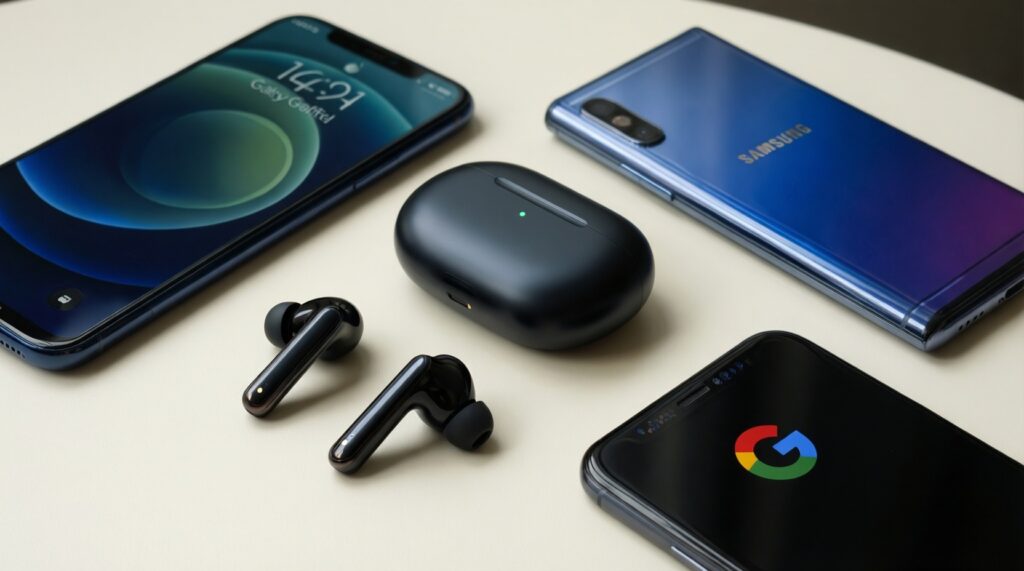
AirPods are usually simplest on Apple devices, Galaxy Buds on Samsung, and Pixel Buds on Android with Google services. Pick the one matching your main phone first, then evaluate fit and ANC.
Why does ANC feel weak even on a Pro model?
Most commonly it's a poor seal or wrong tip size. Refit, try different tips, and re-run the ear-fit test (if available) before assuming the ANC is "bad".
Do I really need multipoint for a phone + laptop workflow?
If you switch several times per day, multipoint reduces friction a lot. If you switch occasionally, manual Bluetooth switching can be fine and saves budget.
Why do my earbuds sound different between iPhone and Android?
Codec paths and system EQ behavior differ. Keep EQ consistent (app vs OS), disable "sound effects" modes, and compare at matched volume.
Which is better for calls in a noisy café?
Choose the model with the most stable connection on your phone and the best wind/noise reduction behavior in your tests. Record short voice notes in the same noisy spot and compare playback.
Should I buy last-gen on discount or mid-tier current-gen?
Discounted last-gen Pro can be strong value if tips and battery are in good condition and firmware/app support remains solid. Mid-tier current-gen can win on comfort and updated connectivity if Pro features aren't critical.