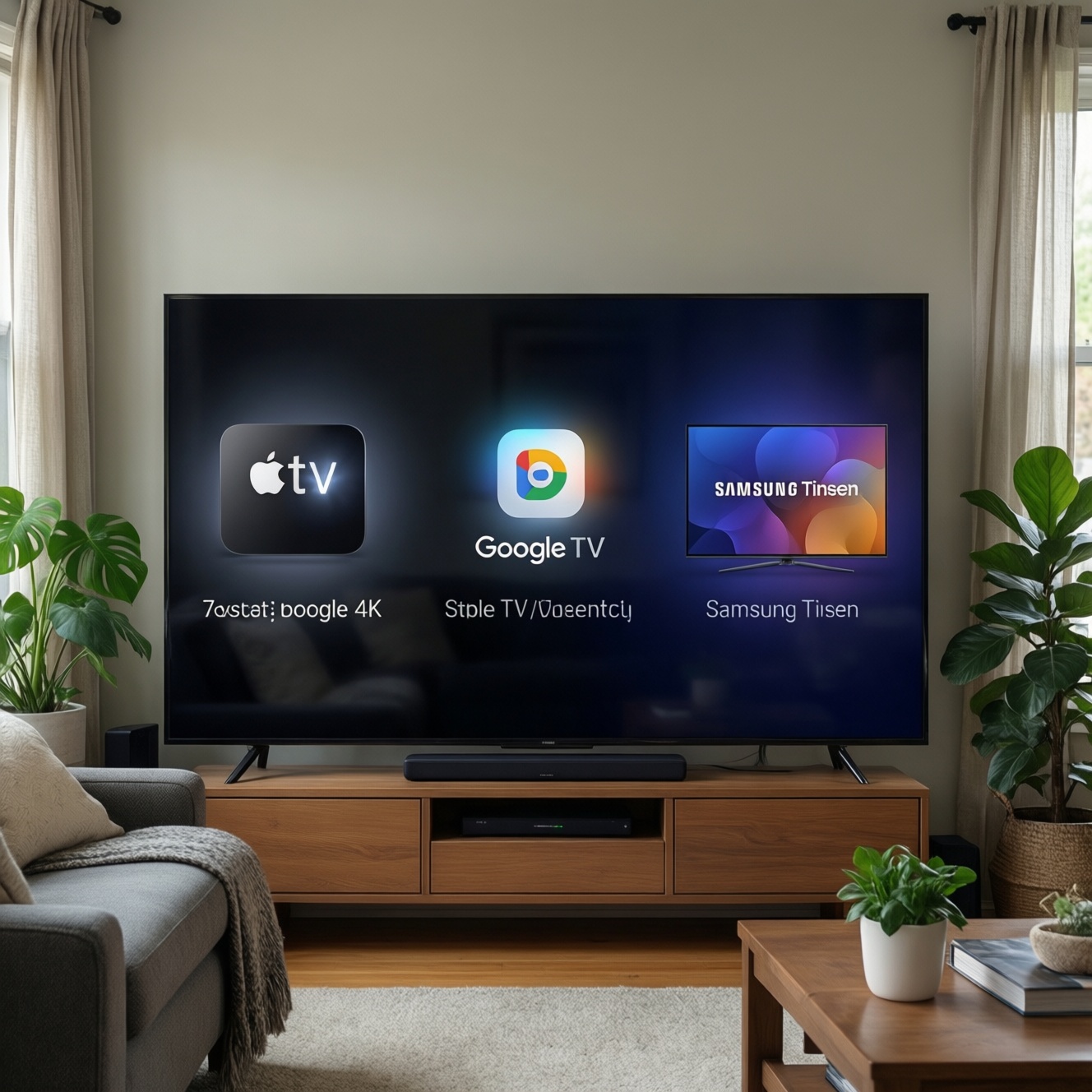
If you want the smoothest phone-to-TV experience and long-term updates, Apple TV 4K is usually the safest pick for iPhone-heavy households. If you want the lowest entry cost and broad Android/Google services, choose a Google TV device. If you want an all-in-one Samsung TV experience, Tizen is convenient, but flexibility depends on the model.
Quick comparison snapshot
- Best iPhone integration: Apple TV (AirPlay, Apple ecosystem coherence) - often searched as ซื้อ Apple TV 4K ราคา.
- Best budget entry: Google TV dongles/boxes - many shoppers compare Google TV ราคา รุ่นไหนดี before buying.
- Best "no extra box" simplicity (Samsung owners): Samsung Smart TV with Tizen - commonly checked via Samsung Smart TV Tizen ราคา.
- Most flexible app/device variety: Google TV (varies by brand and hardware tier).
- Most consistent premium feel: Apple TV 4K (fast UI, polished remote, strong casting/hand-off).
- Smart-home decision driver: choose based on your control stack (HomeKit vs Google Home vs SmartThings).
Platform fundamentals: Apple TV vs Google TV vs Samsung Tizen
Use these criteria to decide quickly (especially when you're doing a real เปรียบเทียบ Apple TV vs Google TV for your home setup):
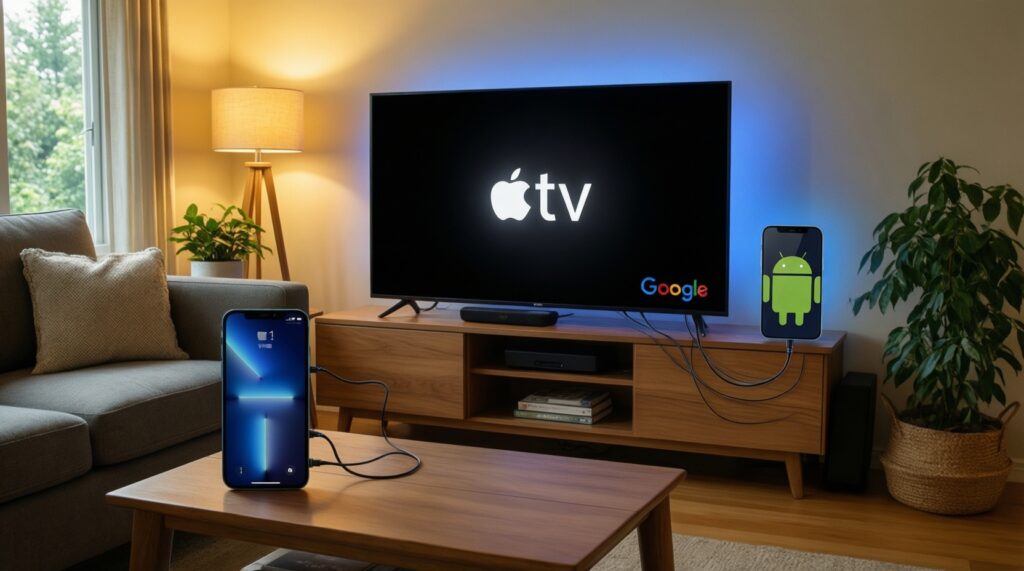
- Phone compatibility: iPhone-first (AirPlay/HomeKit) vs Android-first (Chromecast/Google Home) vs mixed.
- Form factor: external box (Apple TV/most Google TV) vs built-in TV OS (Tizen) vs add-on stick to any TV.
- App availability in Thailand: mainstream streaming + local/regional apps you actually use.
- Performance ceiling: UI speed, multitasking, and how "snappy" apps stay after months.
- Update reliability: how long the platform typically stays current and secure.
- Content discovery: universal search and recommendations vs app-by-app browsing.
- Smart-home integration: HomeKit/Siri vs Google Assistant/Home vs SmartThings ecosystem.
- Hidden ongoing costs: subscriptions, cloud storage tiers, paid apps, and possible HDMI accessory needs.
- Future-proofing: HDR/codec support and whether your TV/sound system can actually use it.
Initial setup and smartphone pairing - which is easiest
Setup friction usually comes from account sign-in, remote control behavior, casting/airplay reliability, and how well your phone becomes a "second remote." Use the options below based on your household phones and whether you're adding a box to an older TV.
| Variant | Who it fits | Pros | Cons | When to choose |
|---|---|---|---|---|
| Apple TV 4K (tvOS) | Mostly iPhone/iPad users; premium home theater | Very smooth AirPlay; consistent UI; strong Apple account handoff | Higher upfront cost; best features skew to Apple services | If you frequently share photos/videos from iPhone, use HomeKit, and want "it just works" behavior |
| Google TV dongle/box (Chromecast built-in) | Android users; mixed households; budget-first upgrades | Easy casting from Android; broad device choices; strong Google account sync | Experience depends on hardware brand; storage can be tight on cheaper models | If your main question is Google TV ราคา รุ่นไหนดี and you want maximum value per baht |
| Google TV built into a TV | People buying a new TV and wanting fewer cables | No external box; one remote; Google services integrated | TV hardware may age faster than an external box; updates vary by TV maker | If you prefer simplicity and are fine replacing the whole TV later instead of swapping a box |
| Samsung Smart TV (Tizen) | Samsung TV owners; SmartThings households | Clean integration with Samsung TV settings; good "single ecosystem" feel | App selection varies by region/model year; less portable than a box | If you're already comparing Samsung Smart TV Tizen ราคา and want built-in convenience |
| Apple TV + any TV (as an "OS upgrade") | Owners of older TVs with slow built-in OS | Makes an old TV feel new; predictable updates; stable casting for iPhone | Extra remote/HDMI port; you still manage TV picture/sound separately | If your TV panel is fine but the built-in apps are laggy or outdated |
| Google TV box + any TV (as an "OS upgrade") | Budget upgrades; travel/secondary rooms | Cheapest way to modernize; flexible; easy to move between TVs | Cheaper units may be slower; more ads/recommendations depending on setup | If you want the lowest entry cost and can tolerate some UI variability |
Connecting to smart-home devices and ecosystem implications
Pick based on the control app your household already uses, then adjust for budget vs premium priorities:
- If your home is HomeKit-first (Apple Home, automations, HomePod), then Apple TV is the most coherent hub-style choice; it's a premium-leaning route but reduces ecosystem friction.
- If your home is Google Home-first (Nest-style devices, Google Assistant routines), then Google TV usually gives the fastest path to voice control and casting; budget models can work well, but choose adequate hardware if you multitask.
- If your home is SmartThings-first (Samsung appliances, sensors, Samsung phones), then Samsung Tizen is convenient on a Samsung TV; for more longevity, pair Tizen with an external box later if the TV OS slows down.
- If your household is mixed iPhone + Android, then decide what you do more:
- If you cast/share from iPhone daily, prefer Apple TV.
- If you cast from Android and rely on Google services, prefer Google TV.
- If you need a budget-first smart-home display in a spare room, then a Google TV dongle is typically the easiest add-on without replacing the TV.
- If you want a premium living-room centerpiece (fast UI, stable casting, fewer "quirks"), then Apple TV 4K tends to feel more consistent-especially when paired with iPhone.
For many buyers asking สมาร์ตทีวี เชื่อมต่อ iPhone Android รุ่นไหนดี, the practical answer is: pick the platform that matches the phone used most often by the person who controls the TV.
Streaming apps, codecs, and regional content availability
- List your top 5 apps (global and Thai/regional). Eliminate any platform/TV model that lacks one of your non-negotiable apps.
- Decide whether you want built-in TV apps (Tizen/Google TV TVs) or a replaceable box (Apple TV/Google TV box) for longer usefulness.
- Check your casting habit: if you regularly send video from your phone, choose AirPlay-centric (Apple TV) or Chromecast-centric (Google TV) accordingly.
- Verify your audio setup: if you use a soundbar/AVR, prioritize stable HDMI-CEC behavior and straightforward audio output settings on the platform you choose.
- Confirm your TV supports the picture formats you care about; avoid paying for a premium box if your TV panel can't benefit.
- Budget for subscriptions you'll actually keep; the device cost is often not the main long-term spend.
- Before buying, compare the total basket: device + any HDMI cable needs + remote preferences + storage (if the platform you choose tends to be tight).
Performance, software updates and device lifespan
- Buying the cheapest hardware tier and expecting "flagship" smoothness; budget Google TV devices vary widely by chipset and memory.
- Assuming a TV's built-in OS will stay fast for the whole TV lifetime; panels last longer than many built-in smart platforms.
- Ignoring storage limits (especially on lower-end streaming devices), then wondering why updates fail or apps get killed in the background.
- Choosing based on headline features, not your phone reality; the daily experience is often dominated by AirPlay vs Chromecast behavior.
- Overpaying for a premium box while using TV speakers only; allocate budget to audio first if sound quality is the goal.
- Not considering household accounts and profiles; shared TVs need clean profile switching and reliable sign-in recovery.
- Assuming all apps behave the same across platforms; some apps are more stable on one OS than another depending on region and model year.
- Forgetting long-term costs: multiple streaming subscriptions, cloud ecosystems, and paid app upgrades can outweigh the device price over time.
Budget analysis: entry models, recurring costs and best-value picks
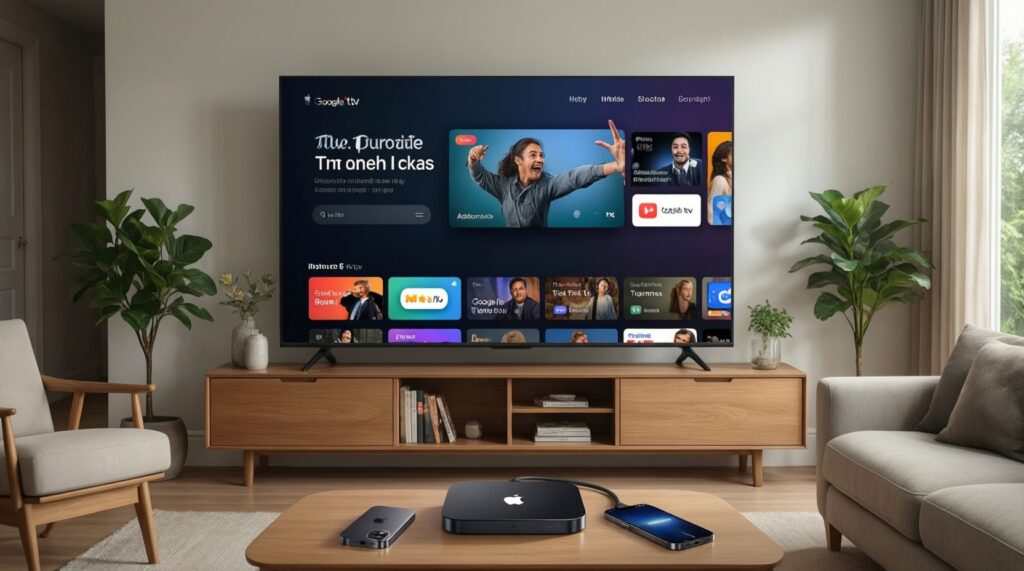
For a budget-first setup, a solid Google TV dongle/box is often the best value when your main concern is "good streaming now" and you're comparing Google TV ราคา รุ่นไหนดี. For iPhone-heavy homes or a premium living room, Apple TV 4K is the cleaner long-term experience (many start by checking ซื้อ Apple TV 4K ราคา). If you're already buying a Samsung TV and want minimal extra devices, Tizen is convenient-just treat it as "built-in now, add a box later if needed."
Common practical dilemmas and short answers
I have both iPhone and Android at home; which platform feels least annoying day-to-day?
Choose the platform matching the main "TV controller" person's phone. If it's truly equal, Google TV is usually more neutral for casting from many Android apps, while Apple TV is best when iPhone sharing is constant.
Is a smart TV OS enough, or should I buy a separate box?
If you want easier upgrades and more consistent performance, an external box is safer. Built-in OS is fine if you prefer fewer devices and accept that the TV's smart features may age faster.
What should I prioritize when comparing prices like ซื้อ Apple TV 4K ราคา or Samsung Smart TV Tizen ราคา?
Compare the total setup cost: device/TV plus any accessories and the subscriptions you'll keep. Also factor in how long you expect to use the platform before it feels slow or unsupported.
Which is better for casting from my phone: Apple TV or Google TV?
For iPhone-first homes, AirPlay on Apple TV is typically the most seamless. For Android-first homes, Chromecast on Google TV is usually simpler and more widely supported in apps.
I mainly watch streaming; do I need premium hardware?
Not always. If your TV panel and internet are mid-range and you don't multitask heavily, a good budget Google TV device can be enough; pay more when you want consistently fast UI and fewer quirks.
If I already own a Samsung TV with Tizen, does adding Google TV or Apple TV still make sense?
Yes, if the built-in apps feel slow, if you want better phone casting, or if you want longer-term updates independent of the TV model year. Treat the box as an "OS refresh" without replacing the panel.