To choose a health-focused smartwatch in Thailand, prioritize the sensors and workflows you will use weekly: reliable continuous heart tracking, ECG availability, sleep insights you can act on, workout accuracy, battery realities, and where your health data lives. Apple Watch tends to win on polished health UX for iPhone, Galaxy Watch on Android integration and features, Pixel Watch on Google-first simplicity.
Essential health features to prioritize when choosing
- Continuous heart monitoring quality: stable resting HR trends, sensible alerts, low false alarms.
- Irregular rhythm notifications: how clearly the watch explains alerts and what you should do next.
- ECG availability and region support: whether ECG is enabled on your model/region and in your companion app.
- Sleep metrics that change behavior: sleep duration + consistency + actionable coaching, not only a score.
- Workout practicality: auto-detection, GPS reliability, indoor accuracy, and app ecosystem.
- Battery vs always-on health: whether you can realistically wear it overnight for sleep tracking.
- Data portability: exports, integrations, and long-term access if you switch phones later.
Price-to-health value: comparing bang-for-buck across Apple, Pixel, Galaxy
| Price tier (TH context) | Typical models | Core health you should expect | Likely compromises | Best for |
|---|---|---|---|---|
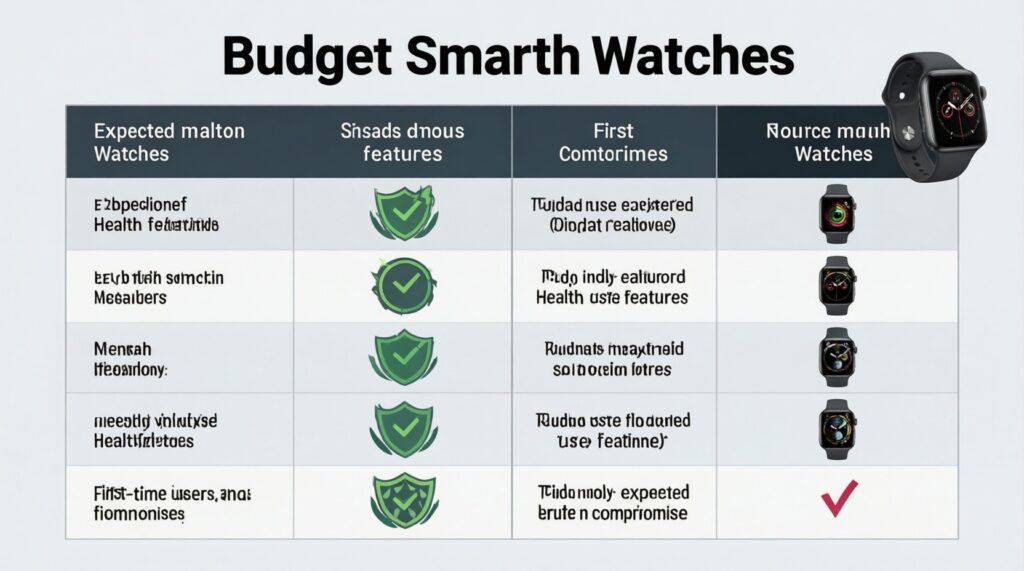
| Budget | Apple Watch SE; Galaxy Watch entry options | Continuous HR, basic sleep tracking, workout tracking | No ECG on some variants; fewer advanced recovery tools; simpler sensors | First health watch; consistent daily activity + sleep baseline |
| Mid-range | Pixel Watch; Galaxy Watch mainstream; Apple Watch Series | Stronger HR features, better sleep metrics, more workout modes | Battery vs overnight wear tradeoffs; features depend on phone ecosystem | Most people who train 2-5x/week and want actionable sleep insights |
| Premium | Apple Watch Ultra-class; Galaxy Watch higher trims | Top-end training tools, potentially better durability + battery headroom | Higher cost for marginal health gains if you do not train outdoors often | Outdoor training, long GPS sessions, "wear it all day + night" routines |
Use these criteria to decide "bang-for-buck" instead of chasing spec lists (and before comparing Apple Watch ราคา, Pixel Watch ราคา, or Galaxy Watch ราคา):
- Your phone ecosystem: iPhone usually pushes you toward Apple Watch; Android users should compare Pixel vs Galaxy first.
- Overnight wear feasibility: comfort + charging routine; no sleep tracking if it lives on the charger.
- Heart feature depth: notifications, trend views, and how often you'll review them.
- ECG need: only valuable if it's enabled for your model/region and you will use it when symptomatic.
- Workout accuracy needs: GPS runs vs gym sessions vs mixed sports; sensors behave differently.
- Coaching quality: do insights translate to "what to do tonight/tomorrow"?
- Battery under real use: always-on display, GPS workouts, continuous sensors, notifications.
- App and device lock-in: whether health data is easy to export if you switch brands later.
Continuous heart monitoring and irregular rhythm detection: real-world accuracy
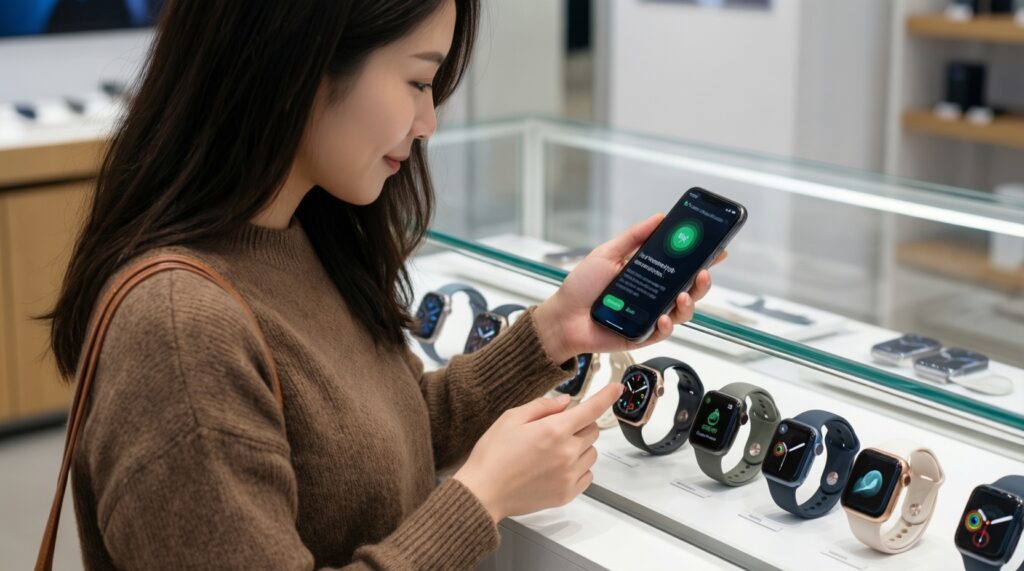
For most buyers, "accuracy" in daily life means stable trends (resting HR, cardio load proxies, recovery signals) and alerts that are understandable and rare enough to trust. Pick the option that matches your phone and how you respond to alerts.
| Option | Who it suits | Pros | Cons | When to choose |
|---|---|---|---|---|
| Apple Watch SE (budget Apple) | iPhone users starting health tracking | Smooth daily HR trends; strong notifications UX; great "set-and-forget" basics | Fewer advanced heart features than higher Apple tiers | You want the best health workflow on iPhone at a lower entry cost |
| Apple Watch Series (mid Apple) | iPhone users who want more heart tooling | More complete heart feature set; polished tracking + alerts; good sensor consistency | Battery/charging routine can limit overnight consistency if you track sleep | You care about irregular rhythm notifications and will review trends regularly |
| Apple Watch Ultra-class (premium Apple) | Outdoor/long-workout iPhone users | More battery headroom for always-on health + long GPS; robust build for training | Premium pricing; diminishing returns if you mostly do short indoor workouts | You need reliable all-day wear plus long sessions without anxiety |
| Pixel Watch (Google-first) | Android users invested in Google services | Clean Google ecosystem integration; straightforward health summaries | Feature depth can depend on subscriptions/apps; battery may shape sleep consistency | You want a simple, cohesive Android health watch without Samsung-specific layers |
| Galaxy Watch (Samsung ecosystem) | Android users, especially Samsung phone owners | Strong Android integration; broad feature set; good workout/watch customization | Some health features may be best on Samsung phones; settings complexity can be higher | You want feature breadth and tight Samsung phone pairing |
If you're specifically looking to เปรียบเทียบ Apple Watch กับ Galaxy Watch for heart monitoring, treat "alert clarity + how often you act on it" as the deciding factor, not only sensor marketing. The best choice is the one you'll wear consistently day and night.
ECG, blood pressure and FDA/CE status: what's clinically reliable
Smartwatch ECG can be useful as a personal record when you feel symptoms, but it does not replace a medical diagnosis. Blood pressure features (where offered) often require careful setup and periodic calibration; treat them as trend tools unless your clinician tells you otherwise.
- If you want ECG for symptom moments, then pick the watch where ECG is actually enabled for your device/region and you can export/share the recording easily with a clinician.
- If you're budget-first, then prefer the most affordable model that still offers the heart alerts and ECG availability you will use; do not pay premium just to "have" ECG if you rarely experience symptoms.
- If you're premium-focused (training + peace of mind), then prioritize the tier that supports longer continuous wear (battery headroom + durability) so you can capture sleep and recovery alongside ECG/heart events.
- If you're considering blood pressure features, then choose a setup you're willing to maintain (calibration reminders, correct cuff reference) and use it for trends, not single readings.
- If regulatory labels (FDA/CE) are your deciding factor, then verify the exact feature, model generation, and regional availability inside the companion app before purchase; marketing pages can be non-specific.
Sleep and recovery metrics: which watch gives actionable insights
- Decide your minimum: sleep duration + wake time consistency vs "recovery readiness" scores.
- Choose a charging routine that enables overnight wear at least 5 nights/week (otherwise sleep data will be noisy and frustrating).
- Pick the ecosystem you'll open daily: Apple Health/Fitness on iPhone, Google-first health apps, or Samsung Health on Galaxy.
- Prioritize trend views (weekly/monthly) over nightly scores if you want behavior change.
- Check whether the watch offers sleep stages, breathing-related signals, and coaching in a way you understand.
- If you train often, choose the platform that best links sleep → recovery → training recommendation for your sport mix.
- Before paying more, confirm you will use at least one "advanced" metric weekly (readiness/recovery/strain), not just glance at it once.
Exercise tracking, auto-detection and ecosystem workouts: practicality for daily training
- Overbuying "sports modes": lots of modes do not guarantee better tracking; pick what matches your top 2-3 activities.
- Ignoring GPS reality: if you run outdoors, prioritize stable GPS and comfortable fit; poor fit can degrade HR during intervals.
- Relying on auto-detection too much: it's great for walks, less reliable for mixed gym sessions; plan to start/stop workouts manually for accuracy.
- Choosing the wrong ecosystem: the best coaching and history usually live inside Apple/Google/Samsung platforms; switching later can be painful.
- Not testing HR lock: some wrists/straps need tighter fit; otherwise HR spikes or drops randomly in workouts.
- Forgetting swim/strength details: water lock, lap accuracy, rep counting, and rest timers matter more than flashy summaries.
- Assuming "more sensors = better training": without consistent wear and clean data, extra metrics add confusion.
- Underestimating notifications: too many alerts can disrupt training and sleep; configure them on day one.
Battery life, connectivity and data portability: impact on long-term health use
For iPhone users who want the most frictionless health experience, Apple Watch (SE for budget, Series for more heart features, Ultra-class for long training wear) is usually the safest pick; for Android users who want tight Samsung phone integration, Galaxy Watch tends to fit best; for Android users who prefer a Google-first approach, Pixel Watch is a clean option-compare Pixel Watch ราคา and Galaxy Watch ราคา against the specific health features you'll actually use. If your main question is สมาร์ทวอทช์เพื่อสุขภาพ รุ่นไหนดี, choose the one you can wear overnight consistently and whose data you'll still access if you change phones.
Practical buyer questions about health-focused smartwatches
Do I need ECG on a smartwatch to benefit from health tracking?
No-continuous HR trends, sleep consistency, and activity tracking often deliver more day-to-day value. ECG is most useful if you expect to record symptoms and share the report.
Which is better in Thailand if I use an iPhone: Apple Watch or Galaxy Watch?
Apple Watch is typically the smoother match for iPhone features and health workflows. Galaxy Watch can work, but you'll usually get the most cohesive experience when the watch and phone share the same ecosystem.
How should I compare Apple Watch ราคา, Pixel Watch ราคา, and Galaxy Watch ราคา without getting stuck on specs?
Price-compare only after confirming (1) you will wear it overnight, (2) the heart features you want are enabled for your model/region, and (3) the health app experience fits your habits. Then buy the lowest tier that meets those needs.
Will irregular rhythm notifications create unnecessary anxiety?
They can if you treat every alert as an emergency. Choose a watch that explains alerts clearly and decide in advance how you'll respond (re-check, rest, or contact a clinician).
Is the Pixel Watch a good health watch if I'm not deep in Google services?
It can be, but its strongest value is simplicity and Google integration. If you prefer Samsung Health features or have a Samsung phone, Galaxy Watch may feel more complete.
What's the most practical way to เปรียบเทียบ Apple Watch กับ Galaxy Watch for fitness?
Compare (1) GPS reliability for your routes, (2) workout start/stop ease, and (3) how the app summarizes weekly training and recovery. Pick the one that makes you review and act on the data.