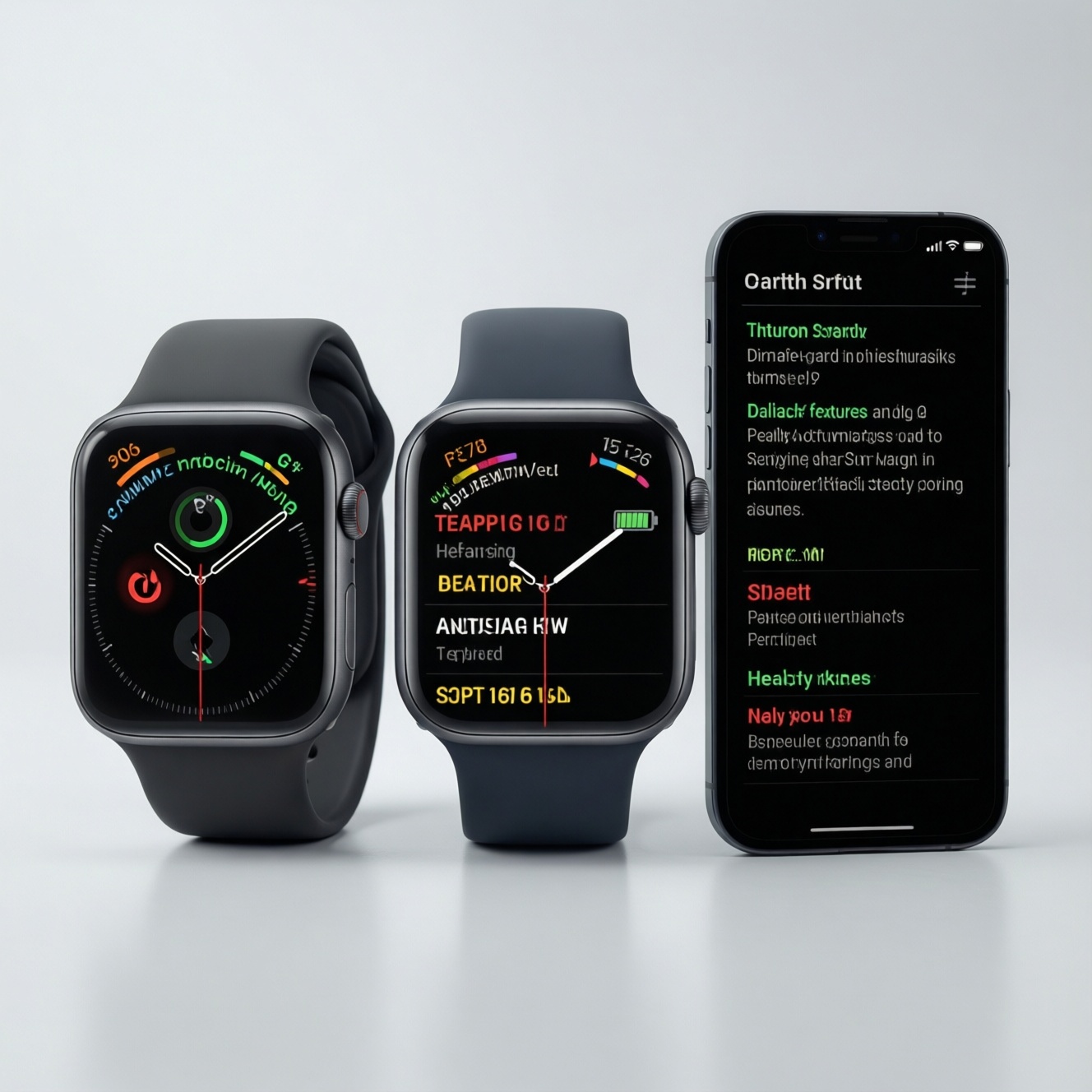
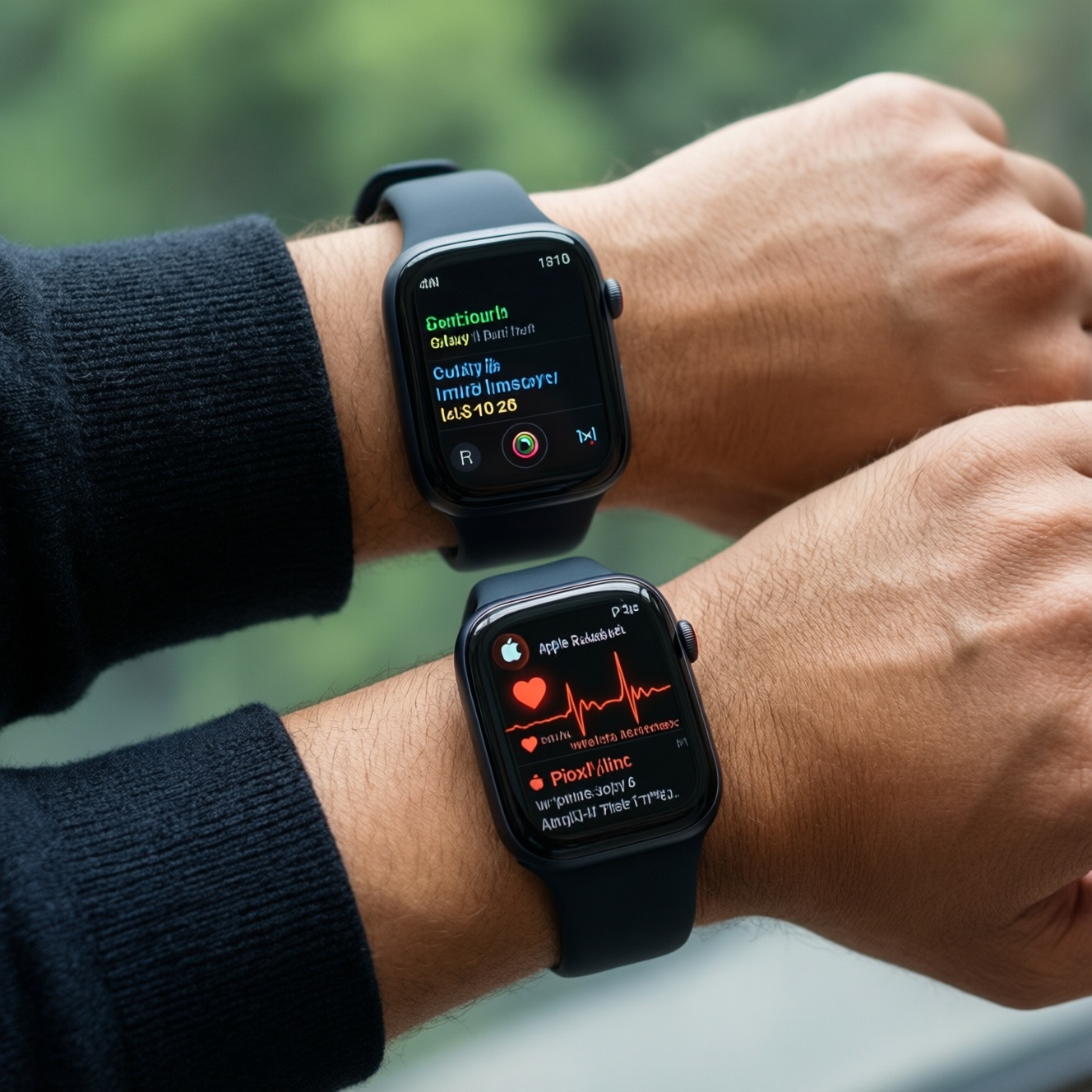
If your priority is the most consistent health measurement across rest, exercise, and nocturnal use, Apple Watch typically delivers the most reliable heart-rate and ECG workflows within its ecosystem, while Galaxy Watch often offers stronger training features for Android users, and Pixel Watch focuses on tight Fitbit-style insights. Accuracy still depends heavily on fit, skin contact, motion, and calibration.
Top measurement differences at a glance
- Heart rate (rest/exercise/nocturnal): consistency is driven more by fit + motion handling than brand labels.
- ECG availability: depends on supported regions, phone pairing, and whether the watch supports ECG in your market and account setup.
- SpO2 and respiration: best treated as trend metrics (especially nocturnally), not diagnostic numbers.
- Steps and calories: algorithms differ; workouts tracked with the right mode are more comparable than all-day estimates.
- Sleep staging and stress/HRV: useful for personal baselines; weak for comparing yourself to others.
- Ecosystem effect: iPhone users get the most "it just works" experience with Apple Watch; Android users get broader choice with Galaxy/Pixel.
How each watch senses health: sensors and signal paths
Use these criteria when doing a เปรียบเทียบ Apple Watch กับ Galaxy Watch กับ Pixel Watch focused on measurement quality, not just features.
- Optical heart sensor design: LED wavelengths + photodiode layout affect signal quality under movement and darker tattoos/pigmentation.
- Sampling strategy by condition: how often it samples at rest, during exercise, and nocturnal tracking changes stability and battery use.
- Motion compensation: accelerometer/gyro fusion helps reject noise; stronger fusion usually helps during intervals and arm-swing sports.
- Skin contact detection: better detection reduces false readings when the watch rides up, is loose, or sits on bone.
- Algorithm transparency and editing: can you correct workout type, intensity, and device placement after the fact?
- ECG workflow maturity: guided posture, repeatability, and how results are stored/exported for a clinician discussion.
- Sleep pipeline: whether sleep stages rely mostly on motion, HR/HRV, SpO2/respiration, or a mix.
- Update cadence: health algorithms evolve; long-term support affects measurement consistency over years.
Heart rate and ECG: methodology, accuracy, and limitations
Technical note: All three families use PPG (optical) for heart rate; ECG (when supported) uses electrical electrodes on the watch. User implication: tight, stable fit matters more than model naming-especially during exercise.
| Variant | Who it fits | Pros | Cons | When to choose |
|---|---|---|---|---|
| Apple Watch (current mainline series) | iPhone users prioritizing consistent HR trends (rest/exercise/nocturnal) and a polished ECG experience | Strong end-to-end health workflows; stable tracking across many daily scenarios | Best experience is locked to iPhone; less flexible if you switch phones | If you're asking Apple Watch รุ่นไหนดีสำหรับสุขภาพ and you already use iPhone, start here |
| Apple Watch Ultra (rugged/high-end) | Outdoor and long-session athletes needing durable hardware and long workouts | Better for harsh environments; comfortable for long training sessions with proper bands | Overkill if you only need office-to-home health tracking | If your exercise tracking is frequent and outdoors, and you want fewer interruptions |
| Galaxy Watch (latest generation) | Android users who train often and want broad workout modes | Good training features; integrates well with Samsung/Android health stack | ECG availability can be region/account dependent; results depend on setup | If you're deciding Galaxy Watch รุ่นไหนดีสำหรับออกกำลังกาย and you use Android daily |
| Galaxy Watch Classic (rotating bezel style) | Users who prefer tactile controls during workouts and daily wear | Usability during sweaty sessions; less screen-tap dependency | Fit/band choice still determines HR quality during intervals | If you frequently start/stop workouts mid-session and want easier control |
| Pixel Watch (Fitbit-centric, latest gen) | Android users who want Fitbit-style insights and simple daily health trends | Smooth Fitbit metrics presentation; strong habit-building experience | Model choice can be constrained by availability and Pixel Watch ราคา in Thailand | If you like Fitbit coaching/insights and you're fine optimizing for trends over raw control |
- Rest condition: validate by checking whether the watch stabilizes quickly after you sit still for a few minutes.
- Exercise condition: for intervals/HIIT, prioritize snug fit above the wrist bone and use a sport band; start workout mode before intensity ramps.
- Nocturnal condition: choose a comfortable band that stays put without cutting circulation; comfort beats "tightness."
SpO2 and respiration: comparing algorithms and real-world performance
Technical note: SpO2 and respiration estimates are highly sensitive to perfusion, motion, and sleep posture. User implication: use them to track changes over time, especially at nocturnal conditions.
- If you want a nocturnal baseline (sleep trends), then enable sleep tracking + SpO2/respiration only if the watch is comfortable enough to wear all night.
- If your readings look jumpy night-to-night, then focus on consistent strap tension and placement; don't compare single nights across devices.
- If you do high-intensity exercise, then ignore SpO2 during motion and check it only after you cool down (rest condition), when the signal is cleaner.
- If you have cold hands/low perfusion, then expect more dropouts; choose the watch and band that maintain stable skin contact without sliding.
- If you need actionable breathing guidance, then prioritize the platform that presents respiration and sleep context clearly, not the one that shows the most numbers.
Activity, steps and calorie estimates: what skews results
Technical note: steps and calories are model-based estimates driven by motion + heart rate + your profile. User implication: the best "accuracy" comes from correct setup and consistent use, not brand hopping.
- Set your height, weight, age, sex correctly and update them when they change.
- Pick the right workout type (run, walk, cycling, strength); don't leave everything as "other."
- For treadmill workouts, calibrate with an outdoor walk/run first when your platform supports it.
- For cycling/weights (low wrist swing), use workout mode and consider a chest strap for heart rate if you need tighter training control.
- Keep watch placement consistent (same wrist, same spot) across weeks so trends mean something.
- Compare week-to-week totals, not single sessions, when judging calories.
- If you're trying to find สมาร์ทวอทช์วัดชีพจรแม่นยำที่สุด, test fit first: tighten one notch for exercise and re-check stability during intervals.
Stress, sleep staging and HRV: clinical relevance vs consumer use
Technical note: "stress" and sleep stages are inferred features based on HR/HRV + motion; they are not clinical diagnoses. User implication: treat them as coaching signals and build a personal baseline.
- Choosing a watch because it shows more sleep stages, without verifying you can wear it comfortably at night (nocturnal condition).
- Assuming stress scores are comparable across brands; each platform uses its own model and thresholds.
- Mixing devices weekly, then concluding one is "better" because the baseline changed (device switch resets your reference).
- Ignoring band and case size; poor fit ruins HRV and sleep readings more than sensor specs do.
- Expecting HRV to behave like a single "health grade" instead of a context-dependent metric (sleep, alcohol, training load, illness).
- Overreacting to one bad night; trends across multiple nights are more meaningful than a single chart.
- Not checking whether the platform lets you tag context (late meal, travel, hard training) to interpret sleep/HRV changes.
- Buying for ECG without confirming regional support and the required phone/account pairing.
Choosing by needs: a decision-tree for different user profiles
- Health priority: Do you mainly want (a) steady heart-rate tracking, (b) ECG workflow, (c) sleep/HRV coaching, or (d) sport training tools?
- Desired features: Do you need ECG on-wrist, automatic workout detection, or detailed training screens?
- Environment: Is your typical use mostly rest/office, high-sweat workouts, outdoor heat/humidity (Thailand), or nocturnal tracking?
- Phone ecosystem: Are you on iPhone (best with Apple Watch) or Android (Galaxy/Pixel integrate more naturally)?
- Fit constraints: Do you have small wrists, tattoos, or frequent strap looseness? If yes, prioritize comfort + stable band options over "spec sheets."
- Buy/skip rule: If you cannot wear it comfortably overnight and snugly during exercise, skip-your data quality will suffer regardless of brand.
Best fit for iPhone users who want the smoothest health workflows is usually Apple Watch (choose the model that you'll actually wear for exercise and nocturnal tracking). Best fit for Android users focused on training controls is often Galaxy Watch. Best fit for Android users who prefer Fitbit-style insights and coaching is commonly Pixel Watch, as long as Pixel Watch ราคา and availability match your budget and timing in Thailand.
Practical accuracy questions users ask
Which is more reliable for heart rate during exercise: Apple Watch, Galaxy Watch, or Pixel Watch?
During exercise, fit and motion handling dominate. A snug sport band and starting the workout mode before intensity increases can matter more than the brand.
Is ECG on a smartwatch "accurate enough" to replace a hospital test?
No. ECG on a watch is a screening tool and can be useful for documenting episodes, but it does not replace clinical-grade testing or physician interpretation.
Why does my SpO2 look fine at rest but unstable at night?
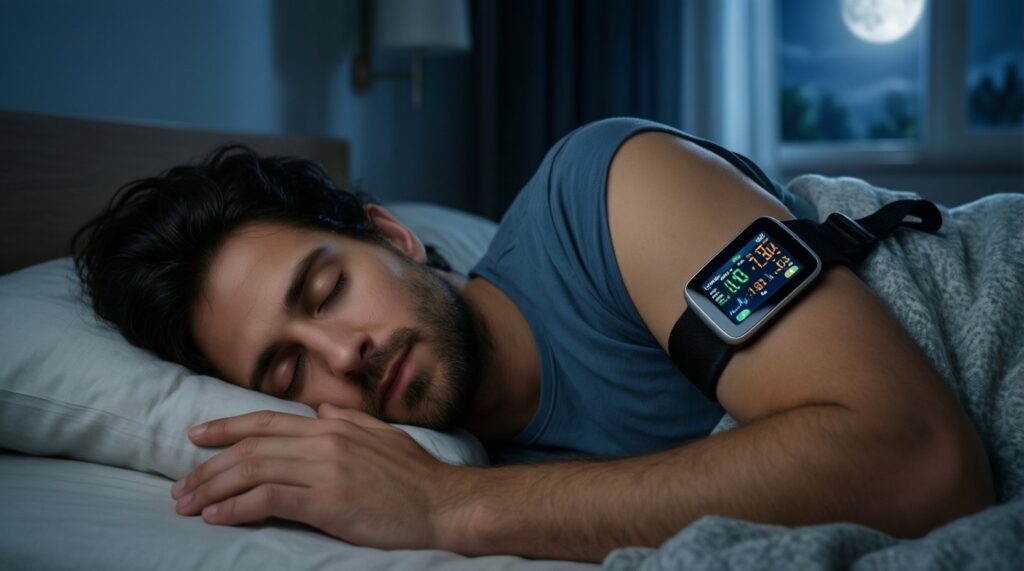
Nocturnal readings are affected by sleep posture, loose straps, and low perfusion. Use trends across multiple nights rather than judging a single night.
Can I compare calories burned across Apple Watch, Galaxy Watch, and Pixel Watch?
Not directly. Each platform estimates calories differently; compare your own trends within one ecosystem after your profile and workout types are set correctly.
What's the fastest way to improve heart-rate accuracy on any watch?
Wear it 1-2 finger widths above the wrist bone, tighten one notch for exercise, and keep the sensor area clean and dry during workouts.
Do sleep stages from these watches have clinical meaning?
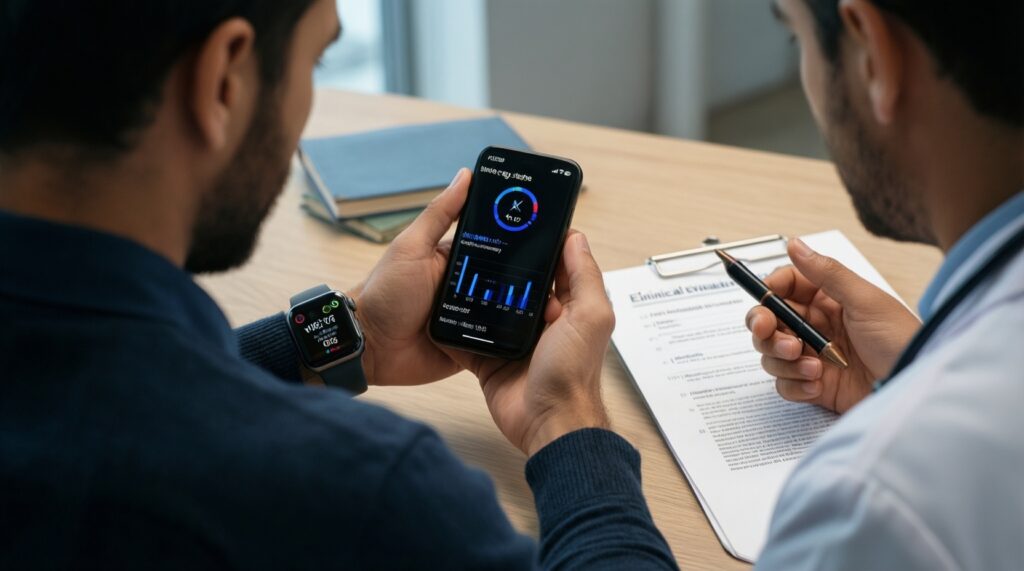
They are consumer estimates and are best used for personal trend tracking. If you suspect a sleep disorder, use medical evaluation rather than device stages.
Should I buy based on "สมาร์ทวอทช์วัดชีพจรแม่นยำที่สุด" claims online?
No. Prioritize stable fit, your phone ecosystem, and repeatable tracking conditions (rest/exercise/nocturnal), then judge by your own week-to-week consistency.